


Blog post by: Eye Physicians of Long Beach

Retinal detachment is a condition that damages the retina. Without prompt treatment, it can cause vision loss. While it’s painless, the sight-threatening condition has key symptoms.
By identifying its tell-tale signs, you can seek timely medical care and protect your sight. Keep reading to learn more about how you can recognize the warning signs of retinal detachment.
What is Retinal Detachment?
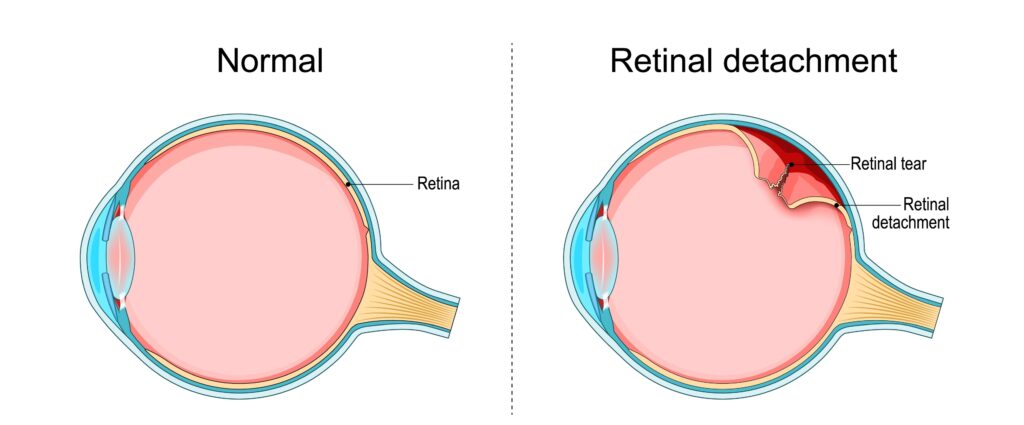
Retinal detachment is an eye condition that happens when the retina separates from its underlying tissue. The retina is the light-sensing structure at the back of the eye, critical for clear, sharp vision.
It detects and converts light entering your eye into electrical signals, which are then sent to your brain, enabling you to see. A detached retina is separated from its blood supply and no longer has enough oxygen.
As a result, retinal cells start to die, which can lead to permanent blindness.
What Causes Retinal Detachment?
There are several types of retinal detachment, each with various causes:
Rhegmatogenous Retinal Detachment
This is the most common form and occurs as you grow older. The vitreous humor, or the clear gel-like fluid in your eye, can shrink and liquefy with age.
When this happens, it may tug on your retina and cause it to tear. If the vitreous seeps through the tear and accumulates under your retina, the pressure can also pull and detach the retina from the underlying tissues.
Other causes of rhegmatogenous retinal detachment include trauma to the head or eye, extreme nearsightedness, and past eye surgery.
Tractional Retinal Detachment
With this type, scar tissue on the retina pulls it away from the eye wall. Poorly controlled diabetes is a common cause of tractional retinal detachment.
Prolonged periods of high blood sugar can damage the tiny blood vessels in your eye, resulting in the formation of scar tissue. If the scar gets bigger, it may tug on your retina, detaching it from the back of your eye.
Tractional retinal detachment can also happen due to eye infections, swellings in your eye, and eye diseases.
Exudative Retinal Detachment
In this type of retinal detachment, fluid accumulates behind your retina, but there’s no retinal tear. As fluid builds up, it can separate your retina from the supporting tissue.
The primary causes of fluid buildup are swelling behind your eye and leaky blood vessels because of conditions like age-related macular degeneration, inflammation, an eye injury, or an eye tumor.
What are the Symptoms of Retinal Detachment?
If a small part of your retina detaches, you may not experience any symptoms. But if a larger area of your retina has detached, you’re more likely to notice symptoms, including:
Flashes of Light

Flashes of light, typically described as brief streaks or bursts of light, can be a sign of retinal detachment. They appear out of the corner of your eye and may occur randomly at various times of the day, often for a few seconds or a split second at a time.
Eye Floaters
Along with flashes, you may also see eye floaters when your retina detaches. Floaters appear as squiggly lines, cobweb-like shapes, dark spots, or small shadowy shapes drifting in your field of vision.
They’re usually more noticeable in bright light, particularly when looking at the clear sky or a white background. While almost everyone sees a few floaters from time to time, the appearance of new floaters or an abrupt increase in eye floaters could point to a detached retina.
Decreased Peripheral Vision
Your retina could be detached if you have reduced peripheral vision. Peripheral or side vision is the ability to see things out of the corner of your eye without shifting your eyes or moving your head.
It expands your field of vision, enabling you to walk, play sports, and drive without bumping into things. A decline in your peripheral vision may be gradual or sudden. It’s easier to notice reduced peripheral vision when it happens abruptly.
Blurred Vision
While blurred vision is a common symptom of many eye conditions, it can also be a sign of retinal detachment, especially when accompanied by other symptoms such as floaters and flashes. As the retina separates from the back of your eye, it can no longer function normally, so your vision may not be as clear as it should be.
When your eyesight is blurry, it becomes challenging to see clearly. You may find yourself squinting or blinking to bring things into focus.
Dark, Curtain-Like Shadow
If the retina is pulling away from your eye wall, you may notice a dark, curtain-like shadow obscuring a portion of your field of vision. This disturbance can come from the bottom, side, or top of your vision and may occur in one or both eyes simultaneously.
Unlike flashes and floaters, the curtain-like shadow doesn’t come and go and can increase in size over a couple of hours.
What Should You Do If You Have Signs of Retinal Detachment?
Retinal detachments are medical emergencies. The longer they go untreated, the higher the risk of vision loss and blindness.
If you have any of the above symptoms, head to your ophthalmologist or the emergency room right away. Timely detection and treatment can help prevent vision loss and preserve your vision.
How is Retinal Detachment Treated?
In most cases, ophthalmologists perform emergency surgery to repair a detached retina. Depending on the severity and location of detachment, the retina can be reattached with one or several of these procedures:

Pneumatic Retinopexy: The procedure entails injecting a tiny gas bubble into the vitreous to push the detached area back into place until a seal forms between your retina and eye wall. Pneumatic retinopexy may be combined with laser surgery or cryotherapy.
Laser Surgery: For this procedure, your ophthalmologist will use a laser to make small burns around the detachment. The burns create scars that adhere your retina to the supporting tissue.
Cryotherapy: In cryotherapy, your ophthalmologist will apply extreme cold to the edges of the detachment. This causes scarring, which helps reattach your retina to its proper position.
Scleral Buckle: A buckle (flexible band) is placed around the sclera or white of your eye. It gently pushes your retina back into the underlying tissues, allowing it to reattach.
Vitrectomy: During the surgery, your ophthalmologist will remove the vitreous gel to prevent any pulling or tearing of the retina. They’ll then repair the detachment and replace the vitreous with a gas bubble, saline solution, or silicone oil.
Safeguard Your Vision from Retinal Detachment
If you experience any warning signs of retinal detachment, quick action can save your sight. At Eye Physicians of Long Beach, we have expert ophthalmologists who can accurately diagnose and provide the most effective and timely treatment to repair a detached retina and preserve your vision.
Do you have any symptoms of retinal detachment? Schedule your appointment at Eye Physicians of Long Beach in Long Beach, CA, today. Your eyesight may depend on it.